
Why Castellini Works
The Partner Most Logistics Companies Can't Be.
Our roots are in produce. Our business is your supply chain. And where we sit, geographically, operationally, and historically, is a position no one else holds.
Here’s what that means in practice.
Built on Produce Expertise
- We understand product, not just freight
- Shelf life, temperature, and timing guide our decisions
- We catch quality issues early
Not a Competitive Threat
- We support growers, shippers, and brands
- No channel conflict
- We build trust and open doors
Fully Integrated Model
- Cold storage, repack, and transportation aligned
- Fewer handoffs, fewer risks
- One partner, one accountable team
Asset Based Stability
- Company-owned fleet and brokerage
- Consistent execution in volatile conditions
Positioned to Optimize the Entire Chain
- Strategic Midwest hub
- Connects West Coast supply to East Coast demand
- Fewer miles, longer shelf life
The Midwest Hub Advantage
You Can't Outsource Geography.
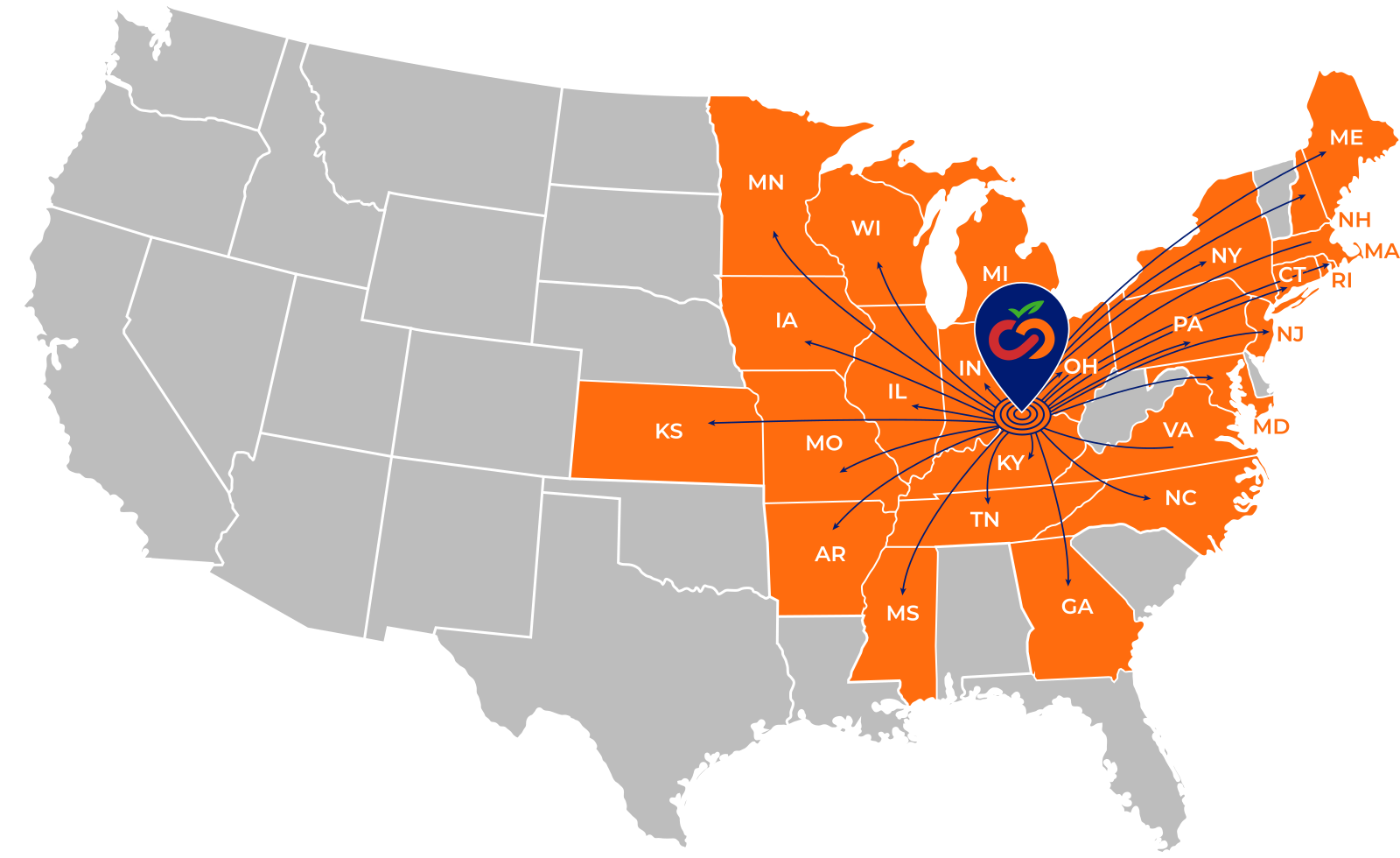
The Midwest is where East Coast distribution begins and national inbound converges. For cold chain logistics, our location is a structural advantage that either works for your supply chain or against it.
Castellini’s Midwest facility is positioned to serve as a true hub for national perishable distribution. That means:
Inbound — handled.
We receive and stage products from California, Texas, Florida and other national origins, giving shippers a reliable Midwest staging point with direct distribution reach into East Coast and Midwest markets.
Consistent distribution lanes.
Our distribution footprint is built around the routes that matter most for perishable product moving across the eastern half of the country, with the asset-based fleet to run them on time, every time.
Cincinnati’s position as a historic rail terminal made it a distribution center a hundred years ago. The infrastructure has changed. The logic hasn’t.
The Proof Is in the Partnership.
- Brand Type: Third-Party Logistics
- Product Type: Multi-Temp
- Operation: Perishable Storage
- Brand Type: Multi-Stop Retail Delivery
- Product Type: Fresh-Cut Produce
- Operation: Distribution & Transportation
- Brand Type: Fulfillment Scale
- Product Type: Direct-to-Consumer
- Operation: Pack-Out Operations
- Brand Type: Logistics Partnership
- Product Type: Indoor Growing
- Operation: LTL & FTL
- Brand Type: Berry Grower-Shipper
- Product Type: Berries
- Operation: National Retail Distribution
- Brand Type: Midwest DC
- Product Type: Fresh Produce
- Operation: Retail Distribution
Learn How Castellini Can Strengthen Your Supply Chain
Food Safety Built Into the Process
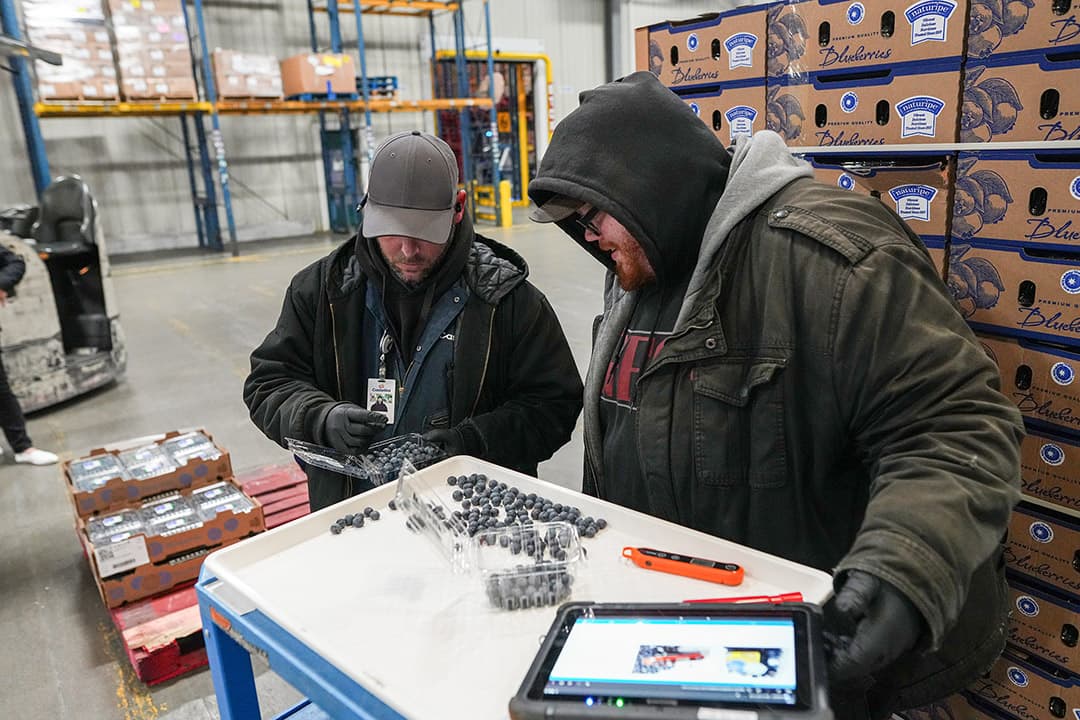
- Castellini’s food safety program is built on SQF standards and a HACCP-based approach, supported by continuous improvement practices including Lean/Six Sigma. Every product is inspected by our Quality Assurance Team upon arrival, and our operations follow applicable USDA and FDA recommendations.
- From inspection and handling to storage, routing, and delivery, our food safety practices are designed to protect product integrity, reduce risk, and help customers move with confidence.
Fewer Miles. Longer Shelf Life. Better Outcomes.
Sustainability in produce logistics isn’t a brand statement, it’s a math problem. The more efficiently perishable product moves through the supply chain, the longer it lasts, the less is wasted, and the fewer resources are consumed getting it to the end consumer.
Castellini’s approach to sustainability is rooted in that logic, not in certification language.
-
Hub efficiency reduces miles.
A centralized Midwest distribution model means product moves through fewer legs between origin and destination. Fewer legs mean fewer emissions, less fuel consumption, and less handling. These outcomes benefit the environment and the product simultaneously.
-
Shelf life is the sustainability metric that matters most in perishable logistics.
Every hour of shelf life that's lost in the supply chain is a resource that was consumed to produce something that won't reach a consumer. Our proactive quality monitoring, precision cold storage, and controlled-environment ripening programs are designed to protect that clock, maximizing usable life from origin to delivery.
-
Asset-based operations mean optimized routes, not available ones.
Because we own our fleet and manage our own routing, we optimize lanes for efficiency, not just availability. Consolidated loads, predictable cadence, and minimal empty miles are built into how we operate, not added on as a sustainability initiative.
We’re running a cold chain operation that takes seriously the environmental cost of doing it inefficiently, and building the infrastructure to do it better.