
For years, a shipper with 15 pallets headed to one region could buy a full truckload, pay for the empty space, and move on. In the last six to eight months however, rates and fuel have climbed far enough that the math is not mathing. Some of those lanes have doubled.
The reflex is to go find a cheaper truck, but I think that’s the wrong focus.
Those 15 pallets can solve the problem instead of creating it. Think of them as product to consolidate in the Midwest and redistribute from there. That’s our rideshare model: LTL pricing with full truckload service.
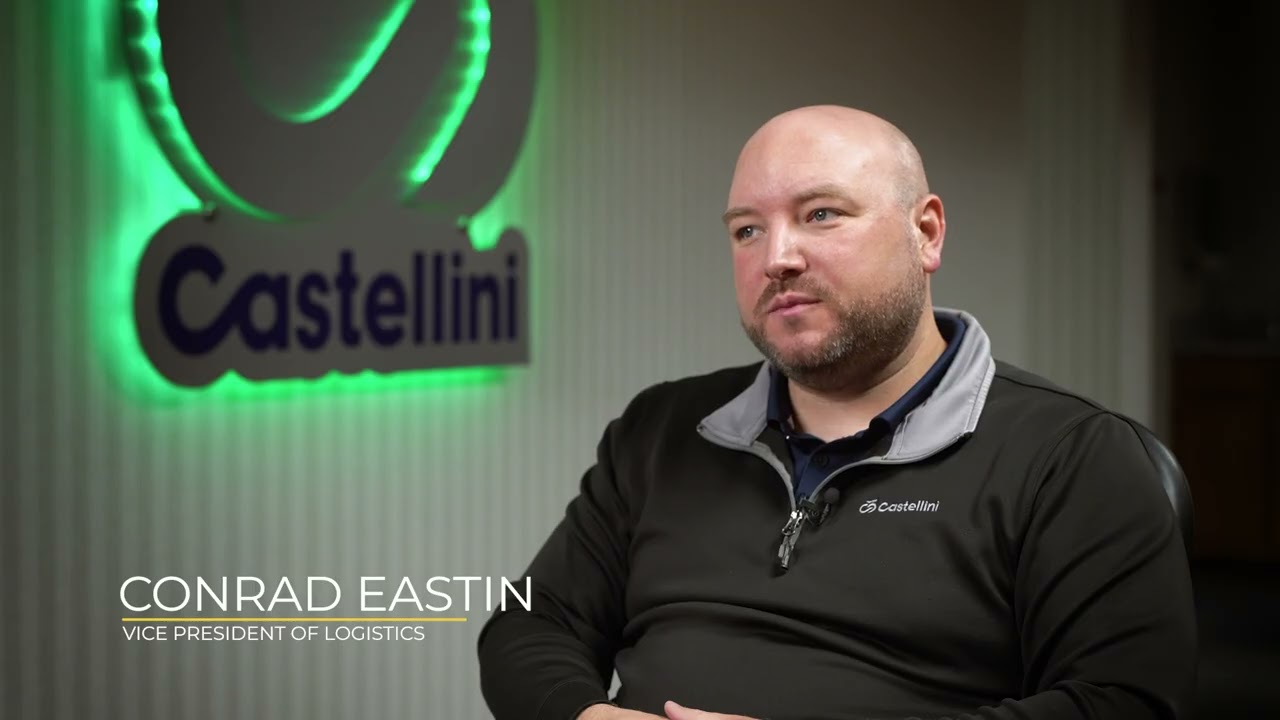
What rideshare means at Castellini
Rideshare means three to six pallets on a shared trailer, priced per pallet, moving on a scheduled lane. You pay for the space you use and nothing beyond it.
Remember around 2020 and 2021 when everyone was using the phrase “essential business”? With global supply chains coming apart, we had to break Castellini’s business down to its essential activities and tasks. The real question was which of our own activities qualified, but the answer never changed.
Our capability around storage, warehousing, distribution, and the rest of the supply chain was worth more to the market than the traditional buy-sell relationship of the wholesale world. And a hundred-plus years of handling highly perishable product was our strongest asset. So, we essentially looked at it and said, “Let’s go all in on that” and pivoted away from wholesale produce.
Instead of competing with produce companies, we became a bigger partner to produce companies. But the activities did not change much. We had been receiving, inspecting, cooling, repacking, allocating, and hauling product for a century. We just started doing it for our customers and stopped doing it for ourselves.
The change upended our day-to-day operations. But constant change is what this company has always done, so this was just the next phase.
How this differs from standard LTL
People hear “shared trailer” and think standard LTL. The difference is in the handoffs. Traditional LTL moves your freight through terminals and hands it off at each one. Every handoff puts a perishable pallet on an uncooled dock. Our model keeps the product in one temperature-controlled system from the time it hits our floor to the time it hits the receiver’s.
The per-pallet piece gets overlooked at the quote stage. It’s what makes the price hold when your volume moves, which I’ll come back to.
Consolidate in, redistribute out
The model only works because of where it sits. Our facility is in the Cincinnati region, which puts 70% of the U.S. population within a day’s drive. We deliver from Minnesota over to Maine, down through the Southeast, and into Arkansas and Tennessee.
Here’s how that changes the conversation with a shipper. A customer calls about a pain point out of one growing region. When we look at the full picture, they’re usually growing in three or four other places too, each one sending partial loads east on its own.
Bring all of it into one Midwest node and those four undersized shipments become one pool of inventory. We combine it and send it out on however many trucks the orders call for. Fewer miles on the product, more shelf life at the other end.
Geography is half of it. The other half is how we build the routes and set the schedules, planned out front with the grower, the shipper, and the receiver.
The second truck
The test of a shared-trailer model comes when the mix outgrows one truck.
A lot of third parties handle that by leaving product off. They have one efficient route, so a pallet gets cut and pushed to the next delivery day. The shipper finds out later. The product that waited is the product that loses shelf life.
We send the second truck. Sometimes we send it at a loss, because we know what a pushed delivery costs the customer at the other end. Retailers and foodservice operators hold you to an on-time percentage to keep the business. Missing it to protect our routing isn’t a trade we’re willing to make.
We spent decades on the buying side of this industry, until we exited wholesale five years ago, so we know what the receiver is measuring. We look at a load the way we’d look at it if the product were ours.
What full truckload service means on a shared trailer
That’s the “full truckload service” half of the phrase. Every inbound gets full receiving and quality checks. Code-date rules are enforced at allocation. The load moves on our own drivers and our own equipment, with one team accountable for the outcome. You pay LTL rates and get handling built for product that spoils.
What happens when your volume spikes
For us, a spike is mostly routine. Two trucks into a region this week, one next week, three the week after: that’s a normal month. The model was built around it.
On our side it can mean booking a truck at a higher cost or finding a driver on short notice. That’s our problem to absorb. Because the pricing is per pallet and set up front, a spike gives us no reason to reopen the rate with the customer.
I tell people our routing is a puzzle every single day. Some lanes look nearly identical week to week. Others have four drops today and two next week, depending on what everyone’s volume is doing.
Flexibility runs both ways
The flexibility runs both ways. Inbound is where it gets tested. If we’ve planned a truck for 20 pallets and a late inbound leaves us with 15, that’s five pallets of revenue gone off that outbound. Our team’s job is to solve it and still service the receiver. Customers notice that more than they notice the weeks when everything goes to plan.
What we need from you up front
The more information we have up front, the better the solution we can provide.
Shelf life and code-date rules
We’re stringent at setup for a reason. How much shelf life does this SKU have? When does it need to be flagged? Are the restrictions USDA, the customer’s, or a specific receiving location’s? Those answers go into our system, so when our team allocates product we catch the conflict while there’s still time to fix it. If we know a lane runs two days and the receiver won’t take product past day ten, we can’t send something that’s already sat ten days with us. The system only knows that if you tell us.
Order lead time
The other one shippers underestimate is order lead time. Some receiving locations won’t give you an appointment without three, four, sometimes seven days’ notice. We track order timing and accuracy internally, since it’s usually the first domino when a delivery goes sideways. The truck is rarely the cause.
What you get back
On our end you get inventory reports on whatever cadence you want, plus EDI feeding straight into your system where that makes sense. Temperature data, tracking, dwell times, camera footage when there’s a claim. Visibility across this industry is at an all-time high. Most of it is available to every provider now. The difference is whether your provider acts on it while the product can still be saved.
Who the rideshare model works for, and who it doesn’t
The fit is a grower or shipper servicing a broad part of the country who needs warehousing, logistics, and value-added work to move as one system. Those are the customers we can solve the most for.
The poor fit is a shipper who wants a number on two locations and nothing else. Most of our best relationships started small, so size isn’t the issue. A quote with no context is the one thing we can’t build on.
How these relationships usually grow
The pattern I see most often runs like this. A customer starts with one transfer a week into our facility, which we redistribute out. Three months later it’s five or six transfers, because we proved the service level and they’re ready to hand us more of the problem.
By year five we’re on the front end, helping a partner price and structure business while they’re still bidding it. Once the solution is built, they already have the answer to “how.” They just have to go get the win.
We’ve been at this since 1896. For most of that we were buying and selling produce. For the last five years we’ve been the supply chain underneath other people’s produce. Same receiving, same quality checks, same fleet, different seat at the table. It sometimes feels like running a startup with 130 years of experience behind it. The shippers who get the most out of us are the ones who treat it that way.
If the full truckload math has stopped working on your partial loads, that’s worth a conversation. Bring us the whole picture, every growing region, not just the one causing you pain. We’ll tell you straight whether we can help.