
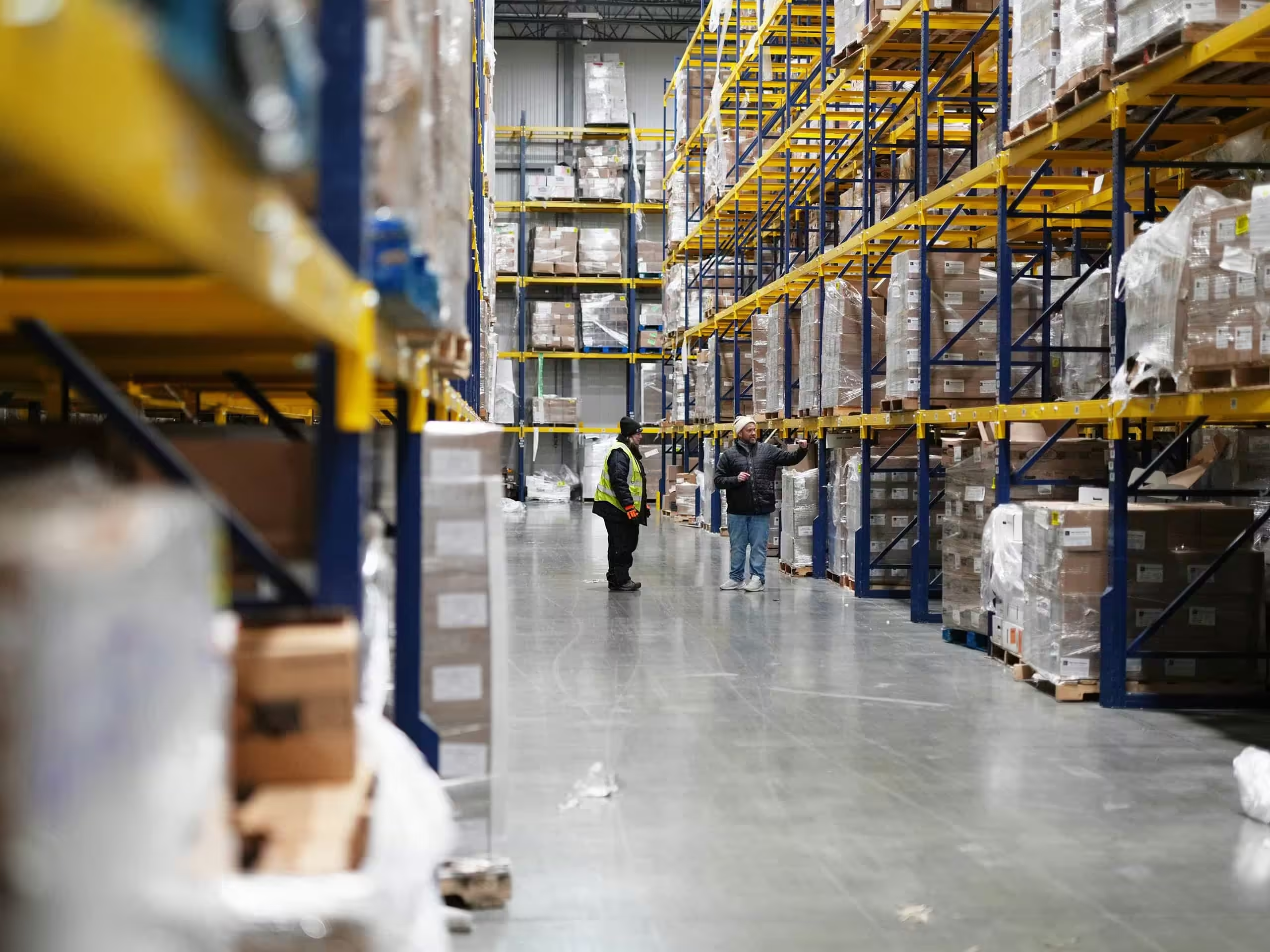
For more than a century, Castellini bought and sold fresh produce. But about six years ago, we stopped and pointed the same warehouse, fleet, and quality team at other companies’ product instead. Why?
Walking away from the business that built Castellini may have seemed like a strange thing to do, but it was the right thing. Here is the story of how we pivoted from produce wholesaler to cold chain logistics partner.
Why we stopped buying and selling produce
This company has changed shape many times since J.J. Castellini founded it in Cincinnati in 1896. We went from supplying local operators to a wider distribution footprint, then to a regional one, then to a national one. Our history is mostly a history of reading what the market needed next and moving toward it.
Remember around 2020 and 2021 when everyone was using the phrase “essential business”? With global supply chains coming apart, we had to break Castellini’s business down to its essential activities and tasks. The real question was which of our own activities qualified, but the answer never changed.
Our capability around storage, warehousing, distribution, and the rest of the supply chain was worth more to the market than the traditional buy-sell relationship of the wholesale world. And a hundred-plus years of handling highly perishable product was our strongest asset. So, we essentially looked at it and said, “Let’s go all in on that” and pivoted away from wholesale produce.
Instead of competing with produce companies, we became a bigger partner to produce companies. But the activities did not change much. We had been receiving, inspecting, cooling, repacking, allocating, and hauling product for a century. We just started doing it for our customers and stopped doing it for ourselves.
The change upended our day-to-day operations. But constant change is what this company has always done, so this was just the next phase.
The hard part was people, not systems
We can change a process. We can change a system. But getting people to understand their new goals and targets is a different job.
Wholesale produce is a buy-sell business. Everyone in the building worked toward one question: what can I do with this load today? Taking the selling away removed that question, along with the way the floor measured a good day. Our longest-tenured employees were skeptical and had earned that. We had to show them we were carrying what Castellini built into its next phase rather than walking away from it.
We also had to learn to lay out the whole operation for a customer. We had always split it by function, with separate groups for inbound, quality, allocation, and outbound. Each group knew its own piece well and never had to walk an outsider through it end to end, because the product was ours. But selling a service meant tracing a customer’s product from the growing region to their door and knowing what each leg of that costs us.
Plenty of our folks saw the switch as a chance to widen what they knew. We also brought in outside hires with experience we did not have. The belief that took longest to move was an old one inside produce: that nothing we learned here would carry over to another company’s operation. Produce is hard and always has been. It still sits much closer to the rest of supply chain work than most of the industry believes. Once the team saw that, they saw we could do that job for a customer without giving anything up.
Turning the transition, some days it felt like working at a startup with 130 years of experience.
What we kept on purpose
Judgment and intervention are two things a cost consultant would have engineered out of this operation. They are the two we fought to keep.
The traditional third-party logistics or cold storage model is a blind A to B: take this case, put it there, send it out, be a cog in the wheel. Our people get a lot of leeway to put a hand up in the middle of that and say: I know what the system says, this looks wrong, this is not packed correctly, I am not shipping it until QA looks at it.
That only works if the team still treats it as ours, so that is how we talk about it internally. We changed who is buying and selling. But quality, customer satisfaction and service levels sit exactly where they always have. If a load is going out under a Castellini seal, it looks the same to us in our truck as it does in theirs. We want to be the first ones telling a customer they have a problem, ahead of them finding it themselves.
Companies newer to this space think about throughput. Throughput is real and worth watching, but a pallet that moves fast and arrives wrong costs our customer more than the hour we saved.
That principle shapes everything downstream of it: where the quality checks sit along the chain, how we plan for seasonal swings, what we need from a shipper up front, how we handle a brand that just landed a national retailer, where automation stops and a person takes over.
Five years in and going strong
The market has moved our way since we left wholesale. Large food brands and restaurant chains increasingly want one partner across the whole flow, rather than stitching together a warehouse, a carrier, a repacker, and a broker themselves. Traditional cold storage sold one rigid deal: you give us X, we hold it for X amount of time, you tell us where it goes. That model makes the warehouse one small link inside a much longer chain. And a growing number of customers want more than a link.
We hear the same complaint from prospects most months: we used to work with so-and-so, and they would not do this, and they would not give us room to grow. What those companies are shopping for is flexibility. We have guardrails of our own, so the answer here is not always yes. But inside those guardrails we will do what other providers will not, because the people who built this operation had to answer for the product themselves.
Four generations and 130 years later, that is still what we are selling. We have spent over five years proving to growers and shippers that the company they knew as a wholesaler can run the toughest parts of their supply chain for them. We want to take on more of that: cold storage, handling and distribution for companies that need a Midwest operation without building one. Castellini is ready to be that partner.